
Hantavirus
文A 64 Sprachen ⌄Viele Menschen stoßen auf das Thema Hantavirus erst, wenn sie Mäusespuren im Keller finden, eine Gartenhütte aufräumen oder eine Meldung über einen regionalen Ausbruch lesen. Dann kommt schnell Unsicherheit auf: War der Kontakt gefährlich? Welche Beschwerden sind normal? Und ab wann sollte man ärztliche Hilfe suchen?
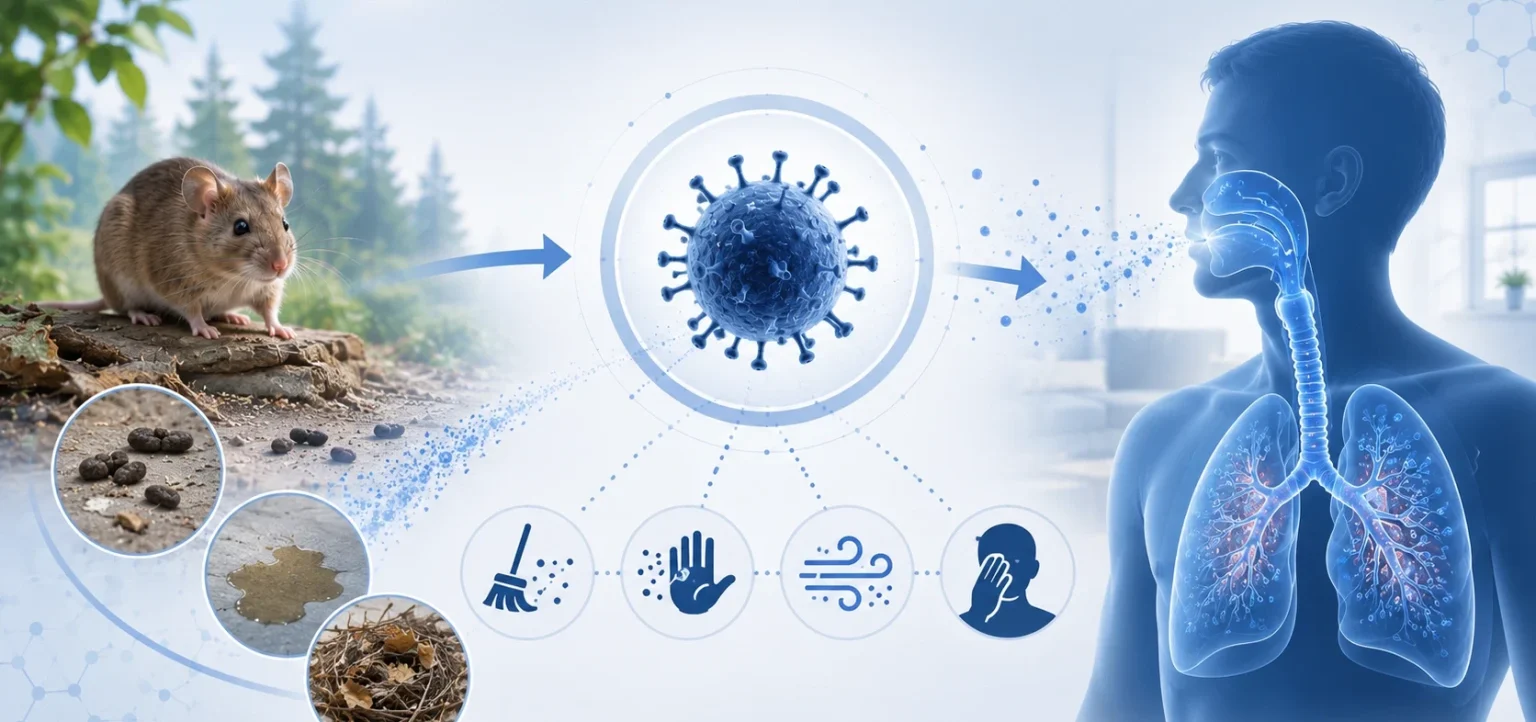
Hantaviren werden vor allem durch bestimmte Nagetiere übertragen. Die Tiere wirken oft gesund, können das Virus aber über Kot, Urin, Speichel oder Nistmaterial in die Umgebung abgeben. Gefährlich wird es besonders dann, wenn trockene Rückstände aufgewirbelt und eingeatmet werden. Das kann beim Fegen, Renovieren, Umräumen oder Reinigen passieren. Laut RKI stehen in Deutschland vor allem Infektionen mit Puumala- und Dobrava-Belgrad-Viren im Vordergrund.
Dieser Ratgeber erklärt, wie Sie Hantavirus symptome einordnen, warum der Kontakt mit Nagetieren entscheidend ist, wie eine Hantavirus behandlung aussehen kann und was über mögliche Hantavirus langzeitfolgen bekannt ist.
Zuletzt aktualisiert: 21. Mai 2026, 14:00 Uhr
Gemeldete Fälle:
11 nach Ländern ansehenBestätigte Fälle:
9Wahrscheinliche Fälle:
2Gemeldete Todesfälle:
3Diese Zahlen dienen nur der Orientierung und können sich ändern, wenn Gesundheitsbehörden neue Informationen veröffentlichen.
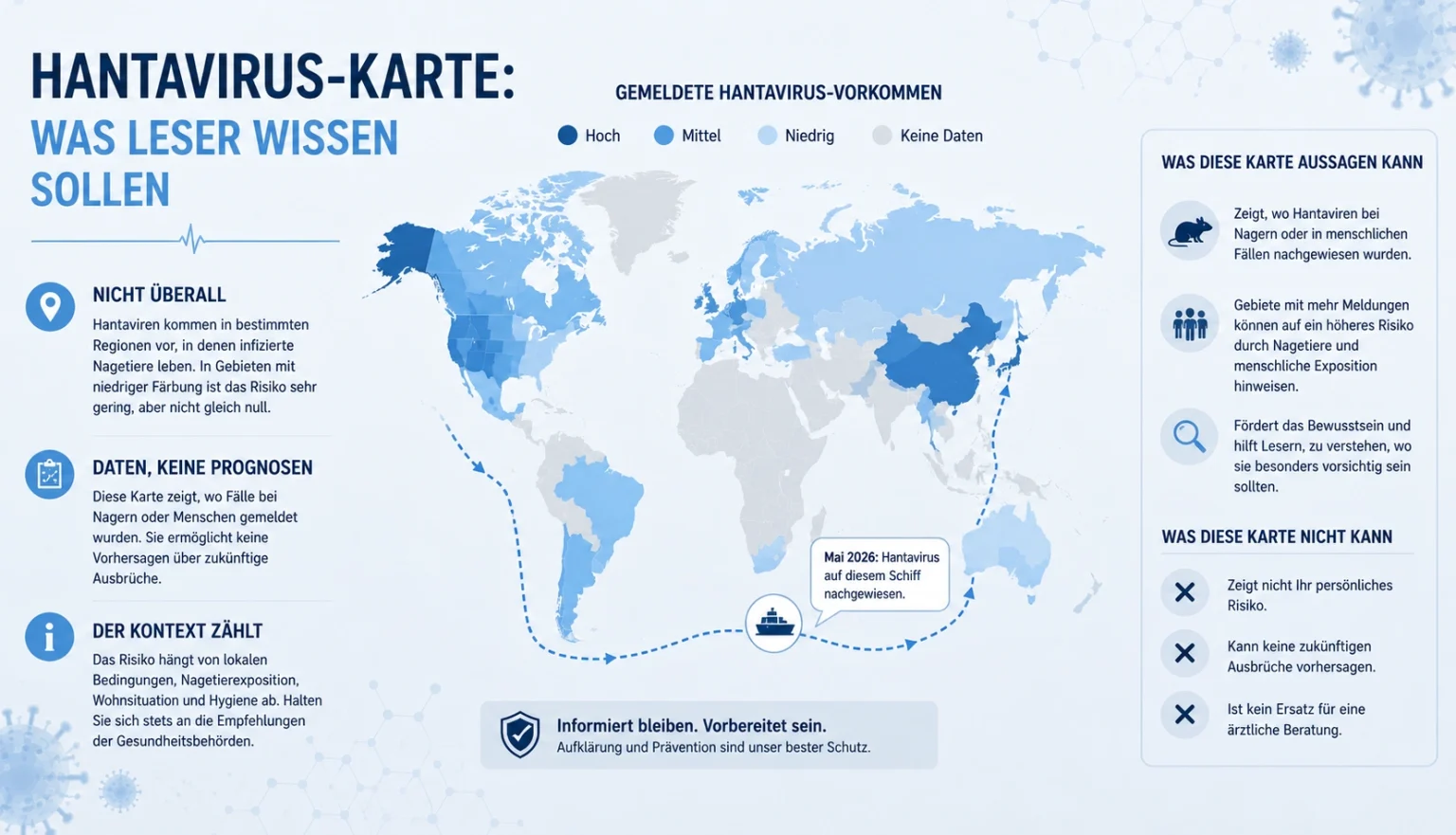
Aktueller Ausbruch: Warum die MV Hondius wichtig ist
Im Mai 2026 wurde ein Hantavirus-Ausbruch auf dem niederländisch beflaggten Kreuzfahrtschiff MV Hondius international untersucht. Die WHO erhielt am 2. Mai 2026 eine Meldung über schwere akute Atemwegserkrankungen an Bord; später wurden mehrere Fälle mit dem Andes-Hantavirus in Verbindung gebracht. Als mögliche Ausgangshypothese gilt, dass der erste Fall die Infektion vor dem Boarding an Land erworben hatte, während weitere Übertragungen an Bord untersucht wurden.
Die Nachverfolgung betraf Passagiere, die in Saint Helena, Praia auf Cabo Verde und Teneriffa von Bord gingen. Am 10. Mai erreichte das Schiff die Kanarischen Inseln; danach wurden Passagiere und ein Großteil der Crew repatriiert. Am 18. Mai kam die MV Hondius in Rotterdam an, wo Isolation, Reinigung und Desinfektion fortgesetzt wurden.
Damit Leser die Situation besser einordnen können, zeigt die folgende Karte die wichtigsten Stationen der bekannten Route und die Orte, an denen Kontaktverfolgung oder öffentliche Gesundheitsmaßnahmen relevant wurden.
Wenn ein harmloser Putzmoment plötzlich wichtig wird
Stellen Sie sich vor, Sie öffnen nach dem Winter eine alte Laube. Es riecht muffig, in der Ecke liegen trockene Krümel, vielleicht Mäusekot. Viele würden sofort zum Besen greifen. Genau das ist der ungünstige Moment: Trockener Staub kann Partikel enthalten, die man nicht sieht.
Eine Infektion entsteht nicht dadurch, dass man das Wort „Maus“ hört oder irgendwo ein Tier vorbeihuscht. Relevanter ist, ob Sie mit belastetem Material in Kontakt gekommen sind. Besonders riskant ist aufgewirbelter Staub in geschlossenen Räumen. Die Bundeszentrale für gesundheitliche Aufklärung beschreibt als mögliche Wege unter anderem das Einatmen von kontaminiertem Staub, Kontakt über kleine Hautverletzungen, verunreinigte Lebensmittel oder Tierbisse.
Viele Suchanfragen nutzen Begriffe wie Hanta virus, Hanta-virus oder Hanta virus symptome. Medizinisch ist „Hantavirus“ die übliche Schreibweise. Gemeint ist aber meist dasselbe Thema: eine Erkrankung, die durch Viren aus Nagetierreservoiren ausgelöst werden kann.
Kurzer Überblick für schnelle Orientierung
|
Bereich |
Was wichtig ist |
|
Hauptquelle |
Infizierte Mäuse oder andere Nagetiere |
|
Kritisches Material |
Kot, Urin, Speichel, Nester, kontaminierter Staub |
|
Typische Umgebung |
Keller, Schuppen, Garagen, Dachböden, Hütten, Scheunen |
|
Häufige Beschwerden |
Fieber, Kopfweh, Glieder- und Rückenschmerzen, Übelkeit |
|
Ärztlich abklären |
Beschwerden nach möglichem Nagetierkontakt |
|
Behandlung |
Meist unterstützend, je nach Schwere im Krankenhaus |
|
Schutz |
Lüften, desinfizieren, nicht trocken kehren |

Wo das Risiko im Alltag entsteht
Das Risiko ist nicht überall gleich. Ein Spaziergang im Wald ist etwas anderes als das Ausfegen einer staubigen Gartenhütte mit sichtbarem Mäusekot. Je trockener das Material und je schlechter die Belüftung, desto vorsichtiger sollten Sie sein.
Häufige Situationen mit möglichem Kontakt sind:
- Aufräumen von Kellern, Garagen, Dachböden oder Schuppen;
- Reinigen eines Ferienhauses nach längerer Pause;
- Umstapeln von Holz, Kartons, Werkzeug oder alten Möbeln;
- Arbeiten in Scheunen, Lagern, Ställen oder Gartenhäusern;
- Entfernen von Nestern oder toten Nagetieren;
- Campen oder Schlafen in Gebäuden mit Nagetierspuren;
- Renovieren in staubigen Räumen mit möglichem Mäusebefall.
Der Ausdruck Hanta virus market taucht gelegentlich in Suchanfragen auf, ist aber kein medizinischer Fachbegriff. Wer damit nach aktuellen Informationen sucht, sollte besser auf offizielle Gesundheitsseiten, regionale Behörden und medizinische Quellen achten.
Hantavirus Symptome: Was zuerst auffallen kann
Die frühen symptome Hantavirus sind tückisch, weil sie nicht sofort eindeutig wirken. Viele Betroffene fühlen sich zunächst einfach krank. Es kann an eine Grippe, einen Magen-Darm-Infekt oder starke Erschöpfung erinnern.
Typische frühe Beschwerden sind:
- plötzliches Fieber;
- Schüttelfrost;
- Kopf-, Rücken- oder Gliederschmerzen;
- starke Müdigkeit;
- Bauchschmerzen;
- Übelkeit, Erbrechen oder Durchfall;
- Schwindel oder Kreislaufgefühl;
- allgemeines Krankheitsgefühl.
In Deutschland verlaufen viele Infektionen mild oder sogar unbemerkt. Es gibt aber auch Verläufe, bei denen besonders die Nieren betroffen sind. Gesund.bund nennt als typische Beschwerden Fieber über mehrere Tage sowie Rücken-, Kopf- und Gliederschmerzen; die Beschwerden treten häufig etwa zwei bis vier Wochen nach der Ansteckung auf.

Wichtig ist also nicht nur die Frage: „Habe ich Fieber?“ Wichtig ist auch: „Gab es vorher Kontakt mit Mäusekot, Staub oder Nistmaterial?“
Beschwerden richtig einordnen
Phase | Mögliche Zeichen |
Anfang | Fieber, Müdigkeit, Kopfweh, Gliederschmerzen |
Magen-Darm-Beteiligung | Übelkeit, Erbrechen, Durchfall, Bauchschmerzen |
Nierenbezogene Warnzeichen | Rückenschmerzen, veränderte Urinmenge, starke Schwäche |
Schwerer Verlauf | Kreislaufprobleme, Atemnot, Verwirrtheit, starke Verschlechterung |
Ärztlicher Anlass | Beschwerden nach realistischer Exposition |
Nicht alle Menschen erleben dieselben Beschwerden. Manche merken nur wenig. Andere werden deutlich krank. Deshalb sollte man Hantavirus symptome nie isoliert betrachten, sondern immer zusammen mit der möglichen Exposition.

Warum manche Verläufe schwerer sind
Ob eine Erkrankung leicht oder schwer verläuft, hängt von mehreren Faktoren ab: Virusart, Menge der aufgenommenen Partikel, persönlicher Gesundheitszustand und Zeitpunkt der medizinischen Abklärung. Auch die Region spielt eine Rolle, weil unterschiedliche Hantaviren vorkommen können.
In Europa stehen häufiger fieberhafte Erkrankungen mit Nierenbeteiligung im Vordergrund. In Nord- und Südamerika gibt es Formen, bei denen Lunge und Kreislauf besonders stark betroffen sein können. Die WHO beschreibt Hantavirus-Erkrankungen als Spektrum, das je nach Virus und Region unterschiedlich verlaufen kann.
Das bedeutet nicht, dass jeder Kontakt dramatisch endet. Es bedeutet aber: Wer nach möglichem Nagetierkontakt krank wird, sollte diese Information nicht verschweigen.
Interaktives Quiz: Prüfen Sie Ihr Risikobewusstsein
Dieses Mini-Quiz ersetzt keine Diagnose. Es hilft nur dabei, das eigene Risikobewusstsein besser einzuschätzen. Wählen Sie pro Frage die Antwort, die am besten passt.
Hantavirus Behandlung
Eine Hantavirus behandlung richtet sich nach dem Zustand der betroffenen Person. Es gibt nicht für alle Hantavirus-Infektionen eine einfache Tablette, die das Virus direkt beseitigt. Meist geht es darum, Beschwerden zu lindern, Flüssigkeitshaushalt und Kreislauf zu überwachen und Komplikationen früh zu erkennen.
Je nach Verlauf können nötig sein:
- ärztliche Kontrolle und Blutuntersuchungen;
- Fiebersenkung und Schmerzbehandlung nach ärztlicher Einschätzung;
- Überwachung von Nierenwerten;
- Flüssigkeits- und Elektrolytkontrolle;
- Behandlung von Kreislaufproblemen;
- Krankenhausaufnahme bei schwerem Verlauf;
- Dialyse bei ausgeprägter Nierenbeteiligung;
- Intensivmedizin bei Atem- oder Kreislaufversagen.
Die Barmer weist darauf hin, dass es gegen Hantaviren selbst kein spezielles Medikament gibt und Beschwerden medizinisch behandelt werden; zur Diagnose werden in der Regel Blutuntersuchungen auf Antikörper eingesetzt.
Bitte behandeln Sie starke Beschwerden nach Nagetierkontakt nicht allein zu Hause. Besonders Atemnot, Kreislaufschwäche oder deutlich weniger Urin sollten zeitnah medizinisch bewertet werden.
Können Hantavirus Langzeitfolgen bleiben?
Viele Menschen möchten wissen, ob Hantavirus langzeitfolgen möglich sind. Die ehrliche Antwort lautet: Ja, nach schwereren Erkrankungen kann die Erholung länger dauern. Das bedeutet nicht, dass jeder Betroffene dauerhafte Schäden hat. Aber Erschöpfung, reduzierte Belastbarkeit oder eine längere Erholungsphase können nach schweren Infektionen vorkommen.
Vor allem wenn Nieren, Lunge oder Kreislauf stark belastet waren, kann der Körper Zeit brauchen. Manche Menschen fühlen sich nach der akuten Erkrankung noch Wochen oder Monate nicht wie vorher. Bei schweren Verläufen sind Nachkontrollen wichtig, damit Ärztinnen und Ärzte prüfen können, ob sich Organfunktionen normalisieren.
Langzeitfolgen hängen stark vom Einzelfall ab. Deshalb sind pauschale Versprechen unseriös. Wer nach überstandener Infektion anhaltende Müdigkeit, Atemprobleme, Schmerzen oder Leistungsknick bemerkt, sollte das ärztlich besprechen.
Wann ärztliche Hilfe wichtig ist
Nicht jedes Unwohlsein nach dem Aufräumen bedeutet automatisch eine Hantavirus-Infektion. Trotzdem sollten Sie nicht zu lange abwarten, wenn die Umstände passen.
Suchen Sie ärztlichen Rat, wenn nach möglichem Kontakt mit Nagetierspuren folgende Beschwerden auftreten:
- Fieber mit starker Abgeschlagenheit;
- Rücken-, Kopf- oder Gliederschmerzen;
- Übelkeit, Erbrechen oder Durchfall;
- Kreislaufprobleme;
- weniger Urin als gewöhnlich;
- Atemnot oder Brustenge;
- schnelle Verschlechterung;
- Verwirrtheit oder Ohnmacht.
Sagen Sie beim Arztbesuch klar, was passiert ist. Ein Satz wie „Ich habe vor zwei Wochen eine Garage mit Mäusekot gereinigt“ kann wichtiger sein als viele andere Details.

Sicher reinigen bei Hanta Virus, ohne Staub aufzuwirbeln
Der beste Schutz beginnt vor der Reinigung. Wer erst fegt und danach nachliest, hat den riskanten Schritt schon getan. Besser ist ein ruhiger Ablauf.
So gehen Sie vorsichtiger vor:
- Türen und Fenster öffnen.
- Den Raum eine Weile verlassen.
- Handschuhe anziehen.
- Kot, Nester und betroffene Flächen mit Desinfektionsmittel anfeuchten.
- Einwirken lassen.
- Material mit Einwegtüchern aufnehmen.
- Abfall dicht verschließen.
- Flächen erneut reinigen.
- Handschuhe richtig ausziehen.
- Hände gründlich waschen.
Bei großem Befall, vielen Spuren oder toten Tieren ist professionelle Hilfe sinnvoll. Das gilt besonders für enge, schlecht belüftete Räume.
Was man nicht verwechseln sollte
Es gibt viele Gründe für Fieber, Müdigkeit oder Rückenschmerzen. Grippe, COVID, Magen-Darm-Infekte, bakterielle Erkrankungen oder körperliche Überlastung können ähnlich beginnen. Deshalb ist eine Selbstdiagnose unsicher.
Hantavirus wird wahrscheinlicher, wenn mehrere Punkte zusammenkommen: realistische Exposition, passende Beschwerden und ein plausibler zeitlicher Abstand. Ein Online-Artikel kann diese Bewertung nicht ersetzen.
Auch der Begriff Hanta virus symptome führt manchmal zu übertriebenen Checklisten. Kein einzelnes Zeichen beweist die Infektion. Der Zusammenhang ist entscheidend.
Alltagsschutz vor Hanta Virus ohne Panik
Sie müssen nicht jeden Keller meiden und nicht jede Waldwanderung absagen. Sinnvoll ist ein nüchterner Umgang mit Nagetierspuren.
Praktische Schutzregeln:
- Lebensmittel und Tierfutter verschlossen lagern;
- Löcher und Spalten an Gebäuden abdichten;
- Müllbehälter geschlossen halten;
- Unordnung in Lagerräumen reduzieren;
- Nagetierspuren ernst nehmen;
- beim Reinigen nie trocken fegen;
- Kinder und Haustiere von belasteten Bereichen fernhalten;
- bei starkem Befall Fachleute einschalten.
So bleibt der Umgang mit dem Thema realistisch: aufmerksam, aber nicht ängstlich.
Fazit
Hantavirus ist selten, aber es verdient Respekt. Die größte Gefahr entsteht nicht durch Panikmeldungen, sondern durch konkrete Exposition: trockener Mäusekot, kontaminierter Staub, schlecht belüftete Räume und unvorsichtiges Reinigen.
Wer mögliche Hantavirus symptome nach einem solchen Kontakt bemerkt, sollte ärztlichen Rat suchen. Wer gesund ist, aber Nagetierspuren findet, sollte sicher reinigen und künftigen Befall verhindern.
Gute Information hilft dabei, die richtige Mitte zu finden: keine unnötige Angst, aber auch keine Nachlässigkeit.
FAQ
Was sind typische symptome Hantavirus?
Typische Beschwerden können Fieber, Schüttelfrost, Kopf-, Rücken- und Gliederschmerzen, starke Müdigkeit, Übelkeit, Erbrechen oder Durchfall sein. Bei schwereren Verläufen können Kreislaufprobleme, Nierenzeichen oder Atembeschwerden hinzukommen.
Sind Hanta virus symptome immer eindeutig?
Nein. Frühe Beschwerden ähneln oft anderen Infekten. Wichtig ist deshalb die Kombination aus Symptomen, möglichem Nagetierkontakt und zeitlichem Abstand.
Was bedeutet Hanta-virus?
Hanta-virus ist eine alternative Schreibweise, die online manchmal verwendet wird. Medizinisch wird meist Hantavirus geschrieben. Gemeint sind Viren, die vor allem durch Nagetiere übertragen werden können.
Wie läuft eine Hantavirus behandlung ab?
Die Behandlung ist meist unterstützend. Ärztinnen und Ärzte überwachen Beschwerden, Kreislauf, Flüssigkeitshaushalt, Nierenfunktion und bei schweren Verläufen auch Atmung oder Intensivbedarf.
Gibt es Hantavirus langzeitfolgen?
Nach schweren Verläufen kann die Erholung länger dauern. Manche Betroffene berichten über anhaltende Müdigkeit oder geringere Belastbarkeit. Ob Langzeitfolgen auftreten, hängt vom Einzelfall ab.
Wann sollte ich zum Arzt?
Wenn nach möglichem Kontakt mit Mäusekot, Staub oder Nistmaterial Fieber, starke Schwäche, Rücken- oder Gliederschmerzen, Übelkeit, weniger Urin, Atemnot oder Brustenge auftreten, sollten Sie ärztliche Hilfe suchen.
Können alle Mäuse Hantavirus übertragen?
Nein, nicht alle Mäuse tragen Hantaviren. Da man infizierte Tiere aber nicht erkennt, sollten Kot, Nester und tote Nagetiere immer vorsichtig behandelt werden.